
In my last post I wrote about why communities are becoming core infrastructure for a world that is coming apart at the seams, and why the money side of that work is the toughest nut to crack. Since then Marin and I have spent a lot of time talking with hosts, and one thing keeps coming up.
The word community has drifted. Search for it today and most of what you'll find is advice on growing a brand's audience, running a Slack group or turning followers into paying members. That's a useful skill set, but it isn't what we mean.
When we say community, we mean people who show up for each other, somewhere. A retreat centre in the hills where people come to rest after burnout. A yoga teacher's week-long gathering that the same faces return to every spring. A meditation hall, a shared house, a field that becomes a village for seven days a year. Belonging happens in places, with people in a room, food on the table and friends who notice when you're missing.
So we've landed on a new way of describing what we do. Coliven is powering the places where people belong.
The world we want to see
Imagine a world where most people live within reach of a place like this. Somewhere to go when life breaks open. Somewhere to learn to sit still, to grieve, to celebrate, to meet the people who will still be your friends in twenty years.
These places already exist, and there are more of them every year. The people running them are some of the most generous and capable people I know. But too many of these places are held together by one or two exhausted hosts, subsidising the whole thing with their own time and savings. When those hosts burn out, the place closes, and everyone who found a home there loses it.
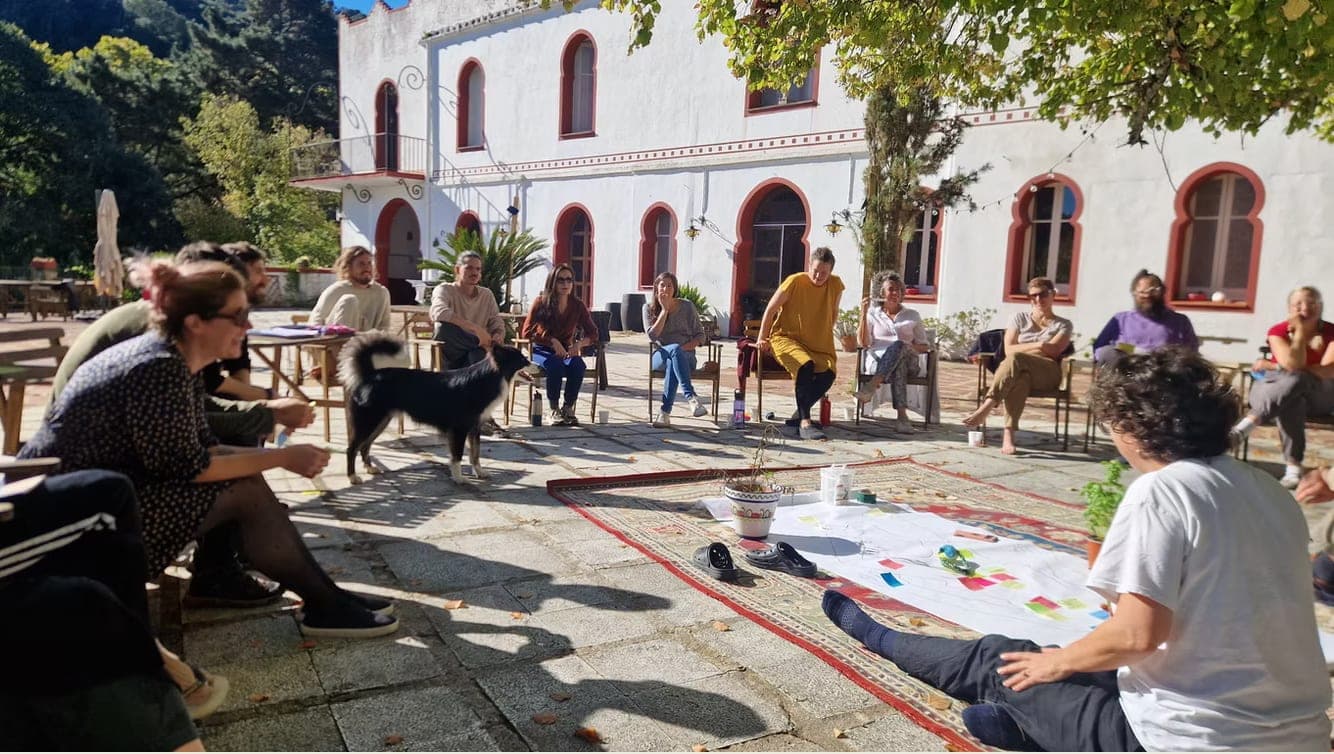
The world we want is one where hosting is a livelihood. Where a retreat centre can plan three years ahead, a meditation teacher can run a gathering without betting their rent on it, and the price of a weekend doesn't shut out the people who need it most.
That's the world we're building Coliven for.
What makes hosting hard
Every host we talk to tells a version of the same story.
You commit to a venue months before a single ticket is sold. You pay the deposit, book the cook, and wait, hoping enough people sign up in time. Guests hesitate because they don't know who else is coming. You cover the gap from your own pocket, or you cancel.
Then the admin arrives. Payment links in one place, a form for dietary needs in another, a spreadsheet to track who has paid, a group chat to remind people about arrival times, and a steady stream of emails asking if there's still a room. None of these tools talk to each other, and most were built for webinars or concerts, not a week of silence in the mountains.
Between gatherings, income drops to zero, even though the people who came last time would happily support you if there were an easy way to do it.
And on top of all that, you're expected to be a marketer, spending hours on Instagram hoping the algorithm shows your post to the right person.
How Coliven helps
We built Coliven around those moments.
Selling before you're certain. Guests pay a deposit now that counts toward their ticket later, so money arrives when you need it. Richard Bartlett, who hosts Casa Tilo in Catalonia, used conditional commitment ("I will if you will") and sold 11 deposits in under two weeks. His event was nearly sold out more than a month ahead, and he told us it solved one of the hardest parts of his business model.
One checkout for the whole stay. Room, transfer and add-ons come together in a single booking, so guests pay once and you don't reconcile three payments by hand.
Keeping gatherings open to everyone. Guests can add a small contribution to fund free or reduced places, so accessibility no longer comes out of the host's margin.
Less chasing. Ask what you need to know before people arrive, like dietary needs and travel plans. Give guests a checklist of readings, forms or links, see who has done them, and remind only those who haven't. Tickets, payments and answers sit together in one place.
Income that outlasts the gathering. Monthly, annual or one-time memberships let the people who love your place keep supporting it between events, with perks for those who stay.
Pricing that follows your success. Coliven is free to use. We take 2.5% of what you sell and nothing until you sell something, so we only do well when hosts do.
Hosts are seeing the difference. Simon Ohler's Treeweek has passed 20k in revenue on Coliven, Richard made his first €10k in sales with us, and more than 90 hosts now run their gatherings on the platform.
A place to be found
The other half of the problem is being found by the right people.
Platforms like Luma and Eventbrite list everything, from product launches to pub quizzes. A silent retreat gets lost between a crypto meetup and a comedy night. We're building something different: a curated home for transformative, ecological and soulful gatherings, where every listing is a place or a host worth knowing.
Our aim is for Coliven to be where hosts want to be found, and the first place people look when they want somewhere to rest, learn or belong. Every host who joins makes the directory more valuable for the next one, and for every guest searching for their people.
Come build it with us
If you run a retreat centre, host wellness gatherings, lead meditation or yoga events, or hold any kind of place where people come together, we'd love to meet you. Set up your community page at coliven.com, or message me and tell me what's hardest about running your gatherings today.
Every place of belonging deserves to last. Let's make sure more of them do.